Last weekend I rode the longest brevet I have successfully completed to date: the 189 mile Quiet Man 300K on the West Coast of Ireland. As I've sheepishly described in the
ride report, all sorts of stuff went horribly wrong on this ride. Thankfully, one thing that didn't let me down was my bicycle's setup. In fact, this is probably the most content I've ever been with a bike on a long distance event.
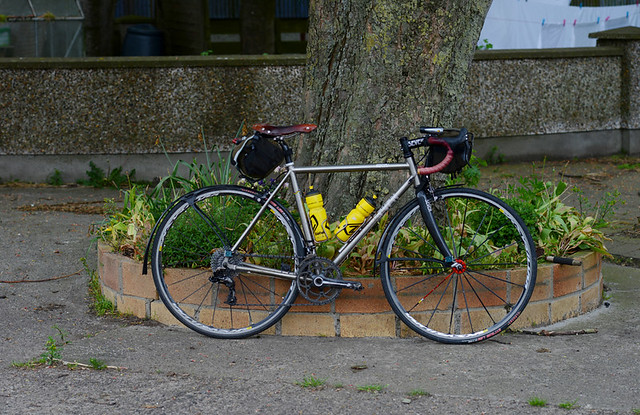
The bike I rode was
my everyday roadbike (a Seven Axiom S) which I've now owned for over 2 years and could not be happier with. While I did not acquire it specifically for long distance cycling, over time it became clear that it suited me for this purpose exceedingly well. Even with skinny tires on rough roads the ride quality feels fantastic, be it after 10 or 100 miles. It is also a very fast, lightweight machine, allowing me to push myself over long distances with little fatigue.
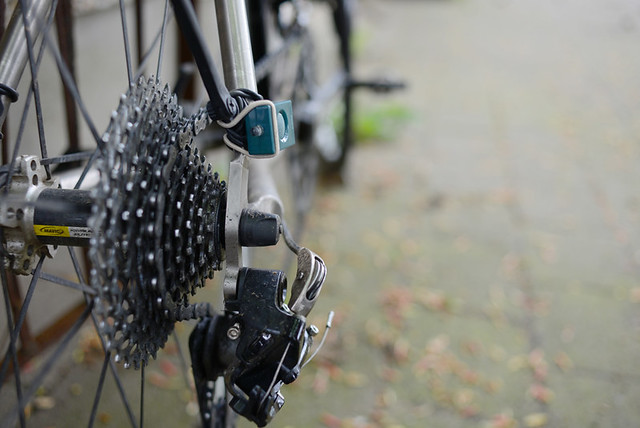
Once I began using my roadbike for brevets last Spring, the one thing I started to wish for was lower gearing. To climb a steep hill in standard road gearing on a club jaunt was one thing, but to do so over and over in the course of a long haul ride with Blalockian amounts of elevation gain was another. I had a hybrid drivetrain setup in mind, but stalled in getting it done, worried that putting too-low gears on my roadbike might limit its usefulness. Happily this turned out not to be the case. My bike now rocks a hybrid
"SRAMpagnolo" drivetrain with sub-1:1 gearing, and there is no going back from the fabulousness of this setup.
So in essence my everyday roadbike is a fast, comfortable bike that is equipped with go-anywhere gearing. For me, that is at the heart of what makes it a suitable brevet bike. Accessories are certainly useful. But these core characteristics are essential.
Getting back to accessories… To each their own, but when cycling for sport (as opposed to transport), I prefer to ride with the most minimal setup I can get away with. So, I only equip my roadbike with fenders, lights, excess luggage, or anything but the basics, if I feel the situation warrants it. That said, a 300km brevet in a remote area was just that sort of situation, and so my bike and I played some dress-up.
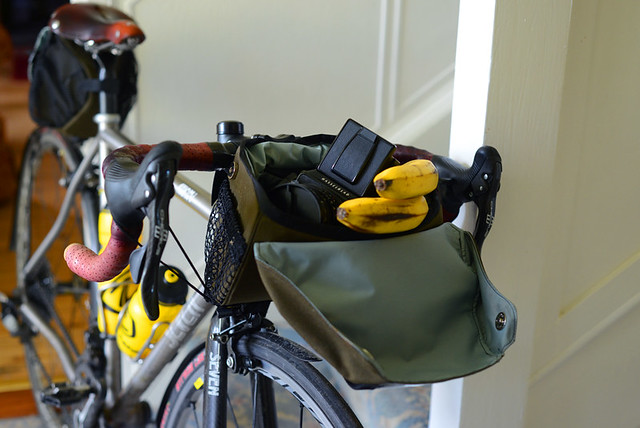
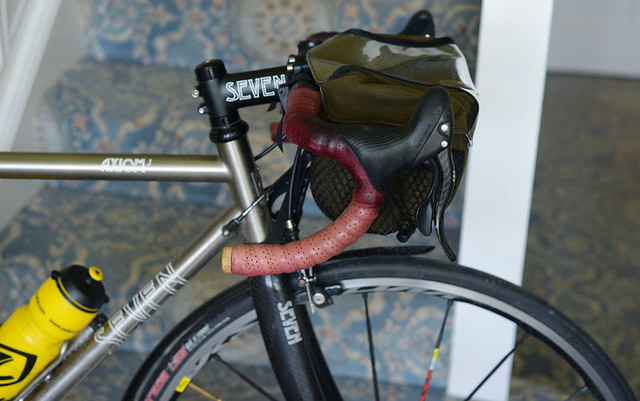
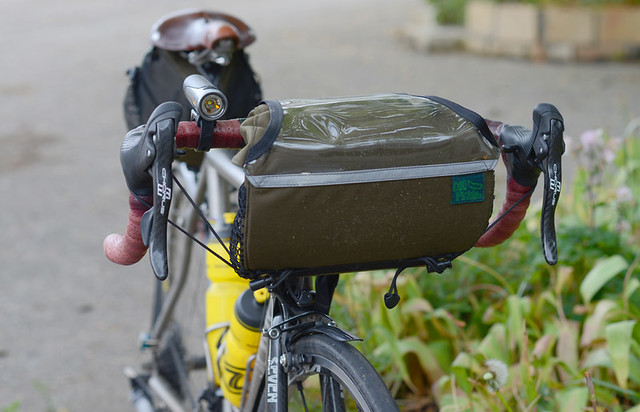
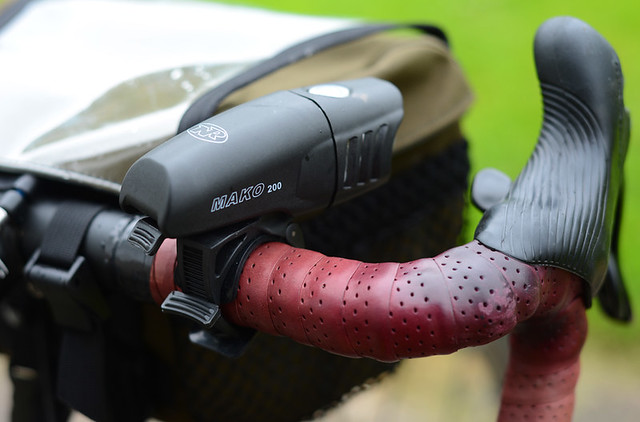
In addition to the small under-the-seat bag I normally ride with, I added a handlebar bag. I find that having a bag up front is handy on long rides, allowing me to retrieve essential items faster and easier than from a saddlebag. My friend
Emily of Dill Pickle makes one that can be used quite comfortably without a supporting rack, allowing me to install and remove it, with minimal commitment (details on this bag forthcoming).
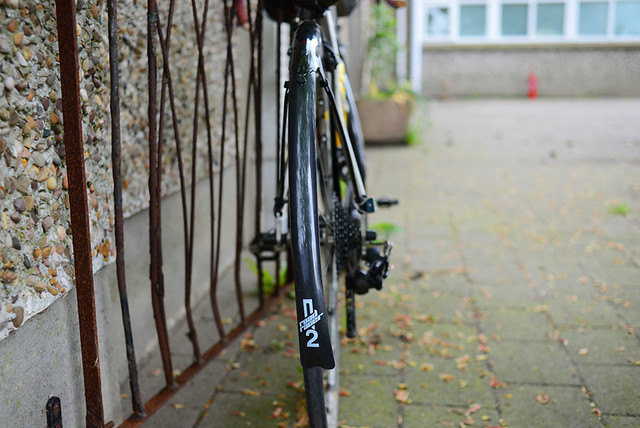
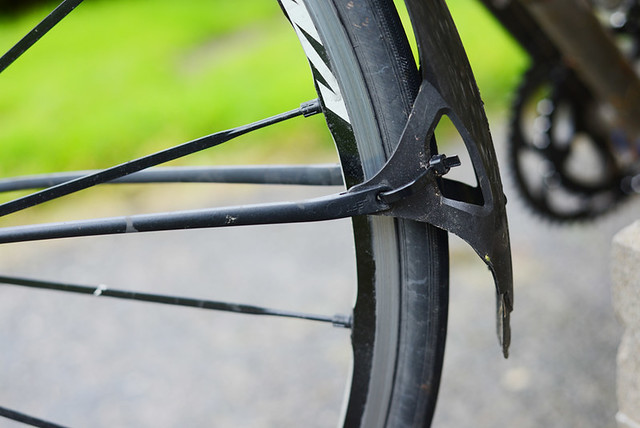
The forecast for the 300K called for steady rain for at least the first half of the day, so with a heavy sigh I installed some fenders. On roadbikes with skinny tires and tight clearances I am more or less content using the modular plastic
Crud Road Racer mudguards. The Cruds are lightweight, offer excellent coverage and don't rattle. Moreover, their modular no-tools-required design makes them physically effortless (albeit logistically elaborate until you get the hang of it) to install/ adjust/ remove, which means I can do it myself even when my hands are tired.
But every fender has its drawbacks, and one issue with the Cruds is their tendency to lose bolts. When this happens, I find it easy enough to fix with a small zip-tie (I carry a few in my bag just in case)- not pretty, but a perfectly functional alternative to the native escape-prone bolts.
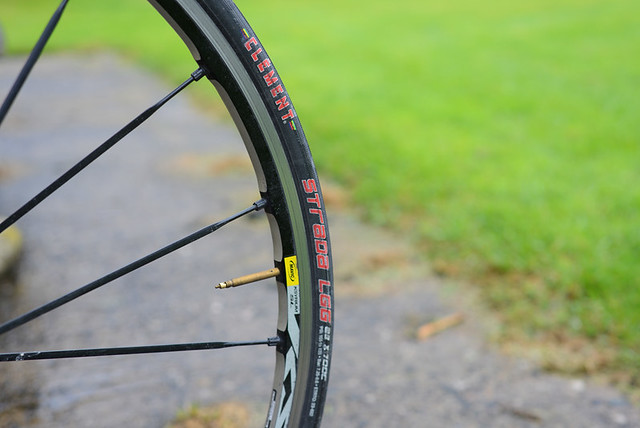
As far as tires, I stuck with the ones I normally have on this bike, which are Clement Strada LGGs in 700Cx23mm (in reality closer to 25mm). What I like about these tires is that they are puncture resistant with a kevlar belt, but feel supple and racy. I do not feel the need for fat tires when doing a paved ride, as my bike is perfectly comfortable with these over long distances on rough Irish roads.
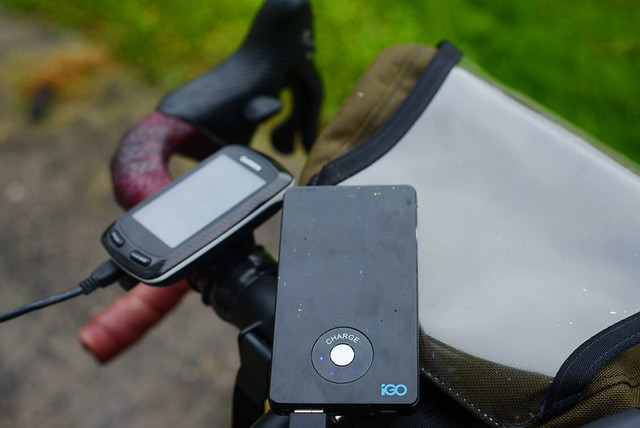
For navigation, I use a combination of the brevet's official paper cue sheet and Garmin GPS route with turn-by-turn instructions. Knowing the 300K would take me longer than 12 hours to complete (around the time my computer battery dies), I brought a backup charger.
As the sun would not set until 9:30pm on the night of the brevet and we'd only ride 4 hours in the dark max, I was not concerned with procuring a dynamo generator setup for my bike. But I did take 3 separate high-power battery headlights just in case - two handlebar-mounted ones and one helmet-mounted.
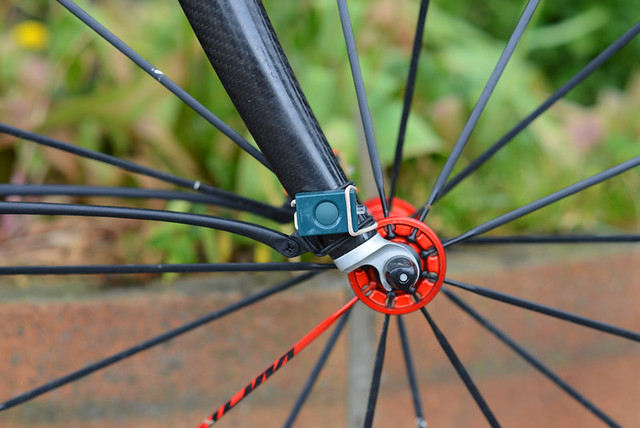
To supplement, I also attached
these teeny headlights to my bike's fork dropouts. Yes, I went a little overboard in this respect! - but last year's experience of the darkness being "too dark" was still fresh on my mind. As it turned out, the roads we were on were easy to navigate at night, so in the end I used only a single headlight with no trouble.
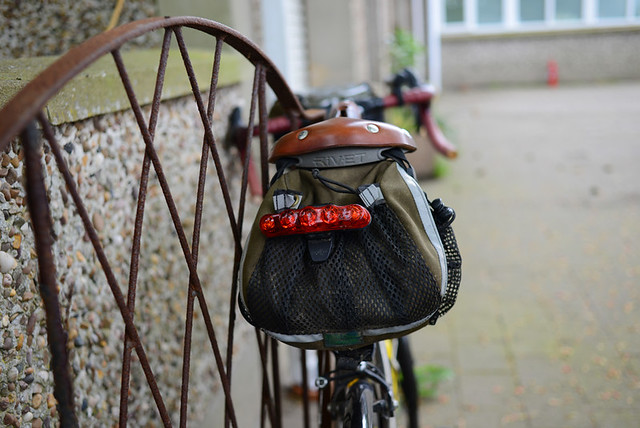
A single tail light, clipped onto my saddlebag's rear pocket was also perfectly sufficient. In the rear bag I carried tools, spare tubes, extra lights, and other supplies which I did not need to have at my fingertips while on the bike. As it happened, I never opened this bag during the 300K brevet. Oh the sleep I lose thinking how much faster I could have been without it. [Joking!! For heaven's sake.]
So that about sums it up. My everyday roadbike fitted with some removable fenders, a handlebar bag, and battery lights got me through a rainy 300k brevet in Ireland comfortably. Of course, every brevet is different. Every bike is different. And most importantly, every rider is different. This post is merely a description of my own setup. Mix, shake and stir - or ignore - according to taste!